Laying technology of Rimini large rock slab
Time:2020-04-22Page views:7323Large Rock Plate Laying Technology (Complete Version)
Rimini Rock Plate has promoted the use of large rock plates in the field of overall home customization and achieved good results in attracting investment for super large rock plates. In order to better serve the consumer group and distributors who pursue luxury home decoration, Rimini has launched the technology of laying large rock panels, including full coverage of walls and floors. The following content will lead everyone to understand the entire process of laying large rock slabs.
★ Specifications: 3000x1000, 3200x1600mm, 2600x1200mm
★ Thickness: between 6mm-12mm
★ Application: With excellent physical performance and outstanding design application advantages. Rimini home rock panels can be widely used in interior decoration, exterior wall decoration, municipal engineering commercial spaces, and home customization fields (kitchen panels, door panels, bathroom panels, furniture panels, etc.), and are cutting-edge technological products leading the new application trend of international building decoration materials in the 21st century.
Dayan board is a multifunctional building material that can be used not only for laying floors and walls, but also for laying exterior walls. It has the characteristics of fast construction and high efficiency. What are its construction characteristics and what are the precautions?
Preliminary preparation
1. Packing
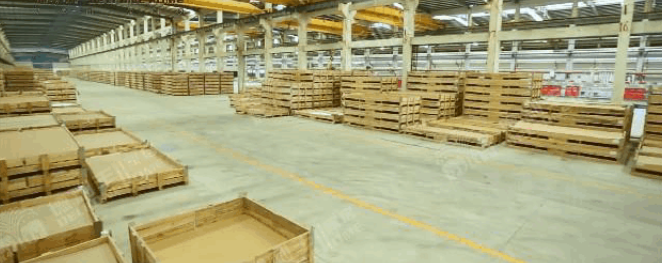
When multiple large rock slabs are packed, pearl cotton should be used to separate them. The storage environment for the packed large rock slabs must be solid, flat, and dry, and the stacking height depends on the strength of the packaging box.
2. Moving
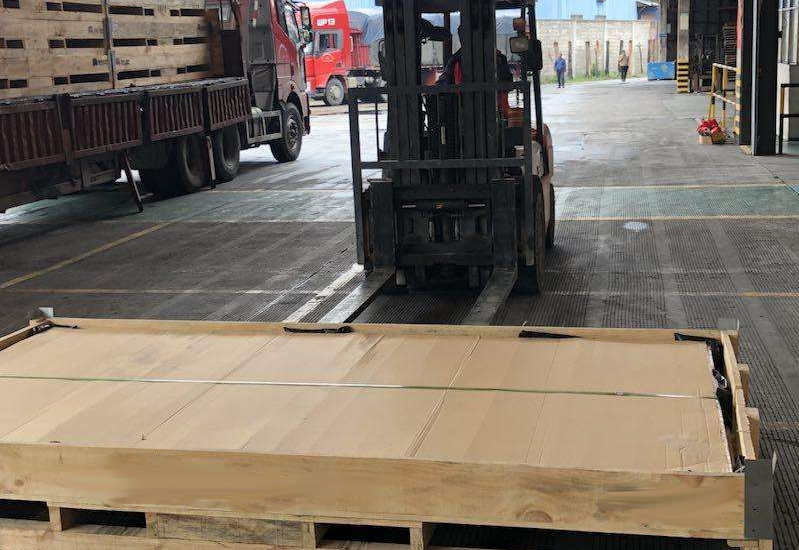
Before loading, the carriage should be cleaned and the truck should be loaded using an extended steel pipe forklift, and neatly stacked using specialized suction cups for large rock slabs. The lifting should be done evenly with force, steadily and gently, and throwing is strictly prohibited. Loose large rock slabs should be placed vertically and cushioned with soft materials at the bottom. Before installation, it is necessary to check whether the product certificate, product name, specifications, and other related information meet the requirements.
3. Grassroots treatment
The construction area should be flat and clean, with a flatness difference of no more than 3mm every 2 meters. There should be no debris that affects the construction, and the flatness of the base layer should not exceed 3mm every 2 meters.
Cutting and processing
1. Cutting

There are two cutting methods available: manual blade pushing and fully automatic bridge cutting controller, which can be used for cutting any shape.
Manual cutting: Measure and determine the cutting position, use uniform force to push the blade forward, move the cutting position of the rock slab to the edge of the work platform, and then press down firmly to break the large rock slab.
Controller cutting: Place the large board on the operating platform and input data to start cutting. The error is only positive or negative 1mm, and there will be no edge explosion or breakage.
2. Polishing

Using a 10 head linear edge grinder with a speed of 2m/min, one-time edge grinding can be achieved without the need for secondary manual trimming.
3. Open hole
The Rimini rock slab can be drilled with any hole type, such as square or circular holes. Four sided and round holes can be manually solved, and water is needed to assist in cooling during the opening process. For complex hole patterns, please use automatic machines (CNC machine tools or waterjet cutting equipment).
Manual drilling: Select the location of the hole on the front of the large rock slab and drill a circular hole. After using the glass drilling tool, slowly cut in at a 45 degree angle and stabilize before cutting vertically.
Automatic machine (CNC machine tool or waterjet machining equipment) drilling: Place the large rock slab on the operating table, import the design drawing, and start the machine.
4. Chamfering
When using a cutting machine with a chamfered guide plate, be sure that the saw blade is parallel to the chamfered guide plate.
5. Grind the edges
Drilling (Grinding) Machine: Import the design drawings and start the machine (place the large rock slab on the control panel, set the corresponding processing parameters, and then start the equipment).
Ground installation
The ground installation commonly uses the adhesive thin paste combination method, with a paste thickness of 3-6mm. Expansion joints should be left between rock slabs on traditional cement sand plaster layers or floor heating foundations, and filled with grout.
Technical breakdown of ground installation
Mix the adhesive for large rock slabs according to the product instructions and mix it evenly with an electric mixer to clean the stains on the back of the rock slab. Apply adhesive to the base layer and the back of the large rock slab separately. After installation, gently press the surface with a handheld vibrator or a rubber hammer. You can use a cross locator to determine the width of the gap between adjacent rock slabs. Place a leveling device on the bottom of the slab, and after the adhesive solidifies, remove the wedge block and cross shaped adhesive particles.
Wall installation technology
Thin construction method is suitable for walls below 24 meters, and hanging stickers are recommended for walls above 24 meters.
Technical breakdown of thin construction method
The installation method is the same as that on the ground, and stainless steel corner pieces can be added to make the installation safer. The distance between the two corner pieces should not exceed 600mm. After the AB glue is cured, it can be installed on the wall. Based on the hole positions of the stainless steel corner pieces on the rock slab, determine the desired hole positions on the wall and use a handheld drill to secure the stainless steel corner pieces with metal screws.
Specific technical breakdown of dry hanging installation method
Use an infrared level and a tape measure to locate the pendant on the structural wall, drill holes, and install aluminum alloy pendant with stainless steel expansion bolts.
Joint filling and cleaning
1. Beautiful seam
The construction environment should be kept dry to prevent the grout from changing color when exposed to water. Stick decorative paper along the edge of the large rock slab gap, inject the grout mixture into the gap, tear off the decorative paper, and wipe the surface of the slab with a clean sponge.


Mr. Han:18923422867
Ms. Li:13392968906
Ms. Huang:18928470116